Pay in installments of $6.49 with
 ,
,
 and
and

Shipping Estimate
USA
- USA
- CAN
- USA
- CAN
Ships within 48 hours · Estimated delivery Sep 21 - Sep 26
 Promo Codes Available:
For Your Every Summer RSVP, with Code: SUMMER15
Description
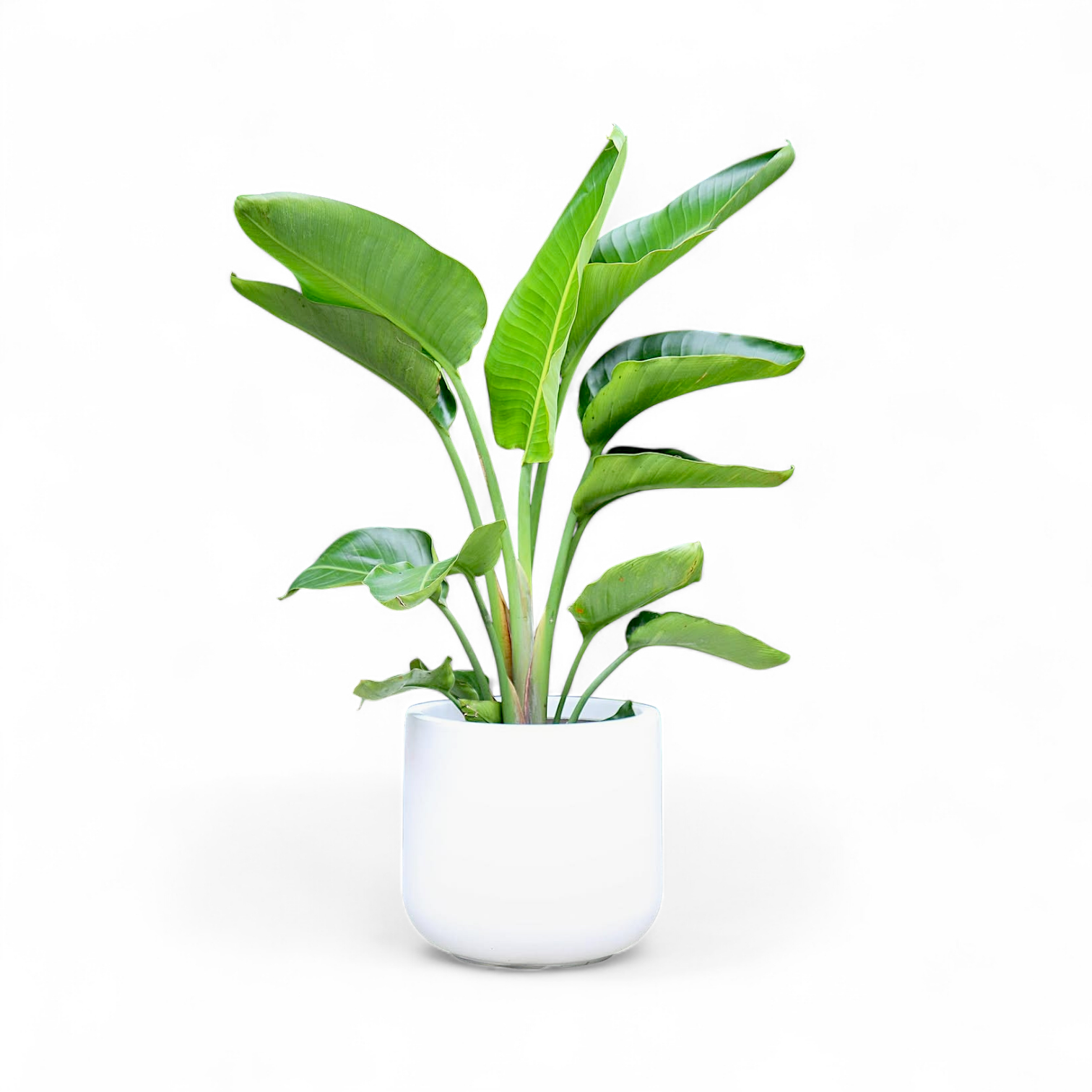
white bird pothos plant White Bird of Paradise (Strelitzia Nicolai)Products > Description (HTML view) ============================================================ > Products > SEO section > There are few plants that command a room the way the White Bird of Paradise (Strelitzia Nicolai) does. Native to the coastal subtropical forests of southeastern South Africa, this magnificent species is the giant of the Bird of Paradise family growing into a towering, multi stemmed tree outdoors and one of the most dramatic and
There are few plants that command a room the way the White Bird of Paradise (Strelitzia Nicolai) does. Native to the coastal subtropical forests of southeastern South Africa, this magnificent species is the giant of the Bird of Paradise family — growing into a towering, multi-stemmed tree outdoors and one of the most dramatic and architecturally beautiful statement plants available for the Indian home indoors. Its enormous, paddle-shaped leaves — glossy, deep green, and up to 1.8 metres wide on mature outdoor plants — fan out from tall, erect, palm-like stems in a way that is immediately, unmistakably tropical. The overall effect is that of a living sculpture: bold, deliberate, and completely at ease with the space it occupies.
It is grown almost exclusively for its extraordinary foliage — but mature plants of 5 years or more do produce flowers of their own, and they are worth the wait. A single, boat-shaped bract up to 30 cm long slowly splits to reveal 5 to 10 individual white flowers with deep blue petal-like structures, resembling a bird in mid-flight — hence the common name. The plant is named after Tsar Nicholas I of Russia, a patron of botany in the 19th century. Slow-growing, long-lived, and genuinely easy to care for, the White Bird of Paradise rewards patience with a presence that grows more magnificent with every passing year.
Light
▾
Bright indirect light to gentle direct sun — at least 6 hours of strong light daily for best growth and deepest green leaf colour. A south or west-facing window is ideal indoors. Outdoors, full sun to partial shade works well in India's climate. Some direct morning sun is beneficial and encourages the most robust leaf development. Avoid harsh direct afternoon sun for young or recently repotted plants — it can bleach and brown the leaves until the plant is established.
Watering
▾
Allow the top 5–7 cm of soil to dry out between waterings, then water deeply until it drains freely from the bottom. This plant prefers a soak-and-dry approach — it does not want to sit in constantly moist soil. In summer and active growth, water every 7–10 days. In winter, reduce to every 2–3 weeks. Never leave standing water in a saucer beneath the pot. Roots and stems rot quickly in waterlogged conditions — overwatering is the most common mistake with this plant.
Humidity
▾
Prefers moderate to high humidity — 50–60% and above. Outdoors in India's tropical climate it thrives naturally. Indoors, mist the leaves regularly with clean water or place a pebble tray with water beneath the pot. Wipe the large leaves down with a damp cloth monthly — this removes dust, helps the plant photosynthesize efficiently, and keeps the foliage looking its glossy best. Keep away from AC vents and heating sources which dry the air.
Growing Media
▾
Well-draining, bark-rich, fertile potting mix — drainage is the priority. Mix 40% quality potting soil, 30% coarse bark or orchid bark, 20% perlite, and 10% compost. pH: 5.5–7.5. The White Bird of Paradise tolerates being moderately pot-bound and actually performs well with snug roots — do not rush to repot. Repot every 2–3 years in spring, or when roots appear at the drainage holes or push up through the soil surface. Move up only one pot size at a time.
Feeding & Fertilization
▾
Feed every 2 weeks during spring and summer with a balanced liquid fertilizer (20-20-20 at half strength) — this is a heavy feeder during active growth. Reduce to monthly in autumn and stop entirely in winter. For mature plants being encouraged toward flowering, switch to a bloom-formula fertilizer in late summer. Top-dress with fresh compost annually. Avoid over-fertilizing which causes salt build-up — flush the soil with plain water monthly to prevent this.
✂️ Pruning & Leaf Care
Remove yellowed, brown, or fully dead leaves by cutting cleanly at the base of the petiole with sharp, clean scissors or secateurs — do not tear. Do not remove leaves that are merely split or tattered; these are healthy and contribute to photosynthesis. Wipe the large glossy leaves down with a damp cloth every 2–4 weeks to remove dust build-up that reduces light absorption. The plant occasionally produces basal offsets or pups from the base — these can be left to grow into a multi-stemmed specimen, or carefully separated and potted individually once they have at least 3 leaves of their own.
Leaves Splitting or Tearing
▾
Completely normal — do not be alarmed. Splitting along the leaf blade parallel to the midrib is an evolutionary characteristic of this species, not damage. It happens naturally as leaves age and cannot be prevented. It does not harm the plant. If tears are appearing on very young leaves, this may indicate physical contact with walls or furniture — give the plant more space.
Yellow Leaves
▾
Overwatering is the most common cause — allow the top 5–7 cm to dry before watering again and check that drainage is working freely. The occasional yellowing and loss of a lower, older leaf is normal as the plant grows — this is not a problem. Widespread yellowing indicates too much water or root rot; unpot, inspect roots, trim any soft or blackened ones, repot in fresh well-draining mix, and reduce watering.
Brown Leaf Tips or Edges
▾
Low humidity, underwatering, or fluoride/salt build-up from tap water or fertilizer. Boost humidity, water consistently, and flush the soil with plain water monthly. Use rainwater or filtered water if brown tips persist despite other improvements. Trim brown tips neatly with sharp scissors — they will not re-green.
Not Growing / Very Slow Growth
▾
This plant is naturally slow — 1 leaf per month in summer is normal. Insufficient light is the most common reason for slower-than-normal growth. Move to a brighter position and ensure the plant gets at least 6 hours of strong indirect light daily. Feed regularly through spring and summer. Severely pot-bound roots also restrict growth — repot if roots are circling the drainage holes.
Spider Mites or Mealybugs
▾
Inspect the undersides of leaves and where the petioles meet the stem — both are common hiding spots. Wipe the leaves down with a damp cloth regularly as prevention. For active infestations, spray thoroughly with diluted neem oil or insecticidal soap every 7–10 days until resolved. Good humidity naturally deters spider mites.
Root Rot
▾
Caused by overwatering or a pot without adequate drainage. Unpot the plant, remove all soft, blackened, or mushy roots, dust with fungicide powder, and repot into fresh well-draining bark-rich mix. Allow the soil to dry more significantly between waterings going forward. Never leave standing water in the saucer beneath the pot.
📋 Quick Plant Profile
| Botanical Name | Strelitzia nicolai Regel & K.Koch |
| Common Names | White Bird of Paradise, Giant Bird of Paradise, Wild Banana, Crane Plant |
| Family | Strelitziaceae |
| Origin | Coastal subtropical forests of southeastern South Africa |
| Plant Type | Evergreen Tropical Perennial; multi-stemmed clumping tree |
| Foliage | Enormous paddle-shaped glossy deep green leaves; naturally split with age |
| Flowers | White petals with deep blue structures; crane-shaped; only on mature plants (5+ years) |
| Blooming Season | Sporadic year-round on mature plants; uncommon indoors without very bright light |
| Light | Bright Indirect to Gentle Direct Sun (6 hrs daily minimum) |
| Watering | Soak and dry — allow top 5–7 cm to dry between waterings |
| Humidity | 50–60%+ preferred; mist regularly and wipe leaves monthly |
| Soil pH | 5.5–7.5; bark-rich, free-draining mix essential |
| Temperature | 18°C–30°C ideal; tolerates down to 10°C; no frost |
| Mature Height (Indoors) | 1.5–2.5 m in pots; up to 3–6 m given space and time |
| Mature Height (Outdoors) | Up to 6–9 m in tropical garden conditions |
| Growth Rate | Slow to moderate — approx. 1 new leaf per month in summer |
| Repotting | Every 2–3 years; tolerates being moderately pot-bound |
| Ideal For | Living Rooms, Offices, Entranceways, Bright Outdoor Spaces, Landscapes |
| Care Level | Easy — one of the most forgiving and rewarding large indoor plants |
Shipping Notes
- Free Standard Shipping on $100+ Orders to the USA.
- Except Preorder products are shipped in 48 hours.
- Delivery to the USA:
- Standard Shipping : 3-10 business days
- If time is of the essence, please consider selecting expedited delivery for faster service.
Exchange/Return Notes
- We offer a 30-day return/exchange service after receiving.
- Final sale items are not eligible for returns or exchanges.
- To process your return/exchange, please contact us at [email protected]
- Please click here for more details>>> Return & Exchange Policy